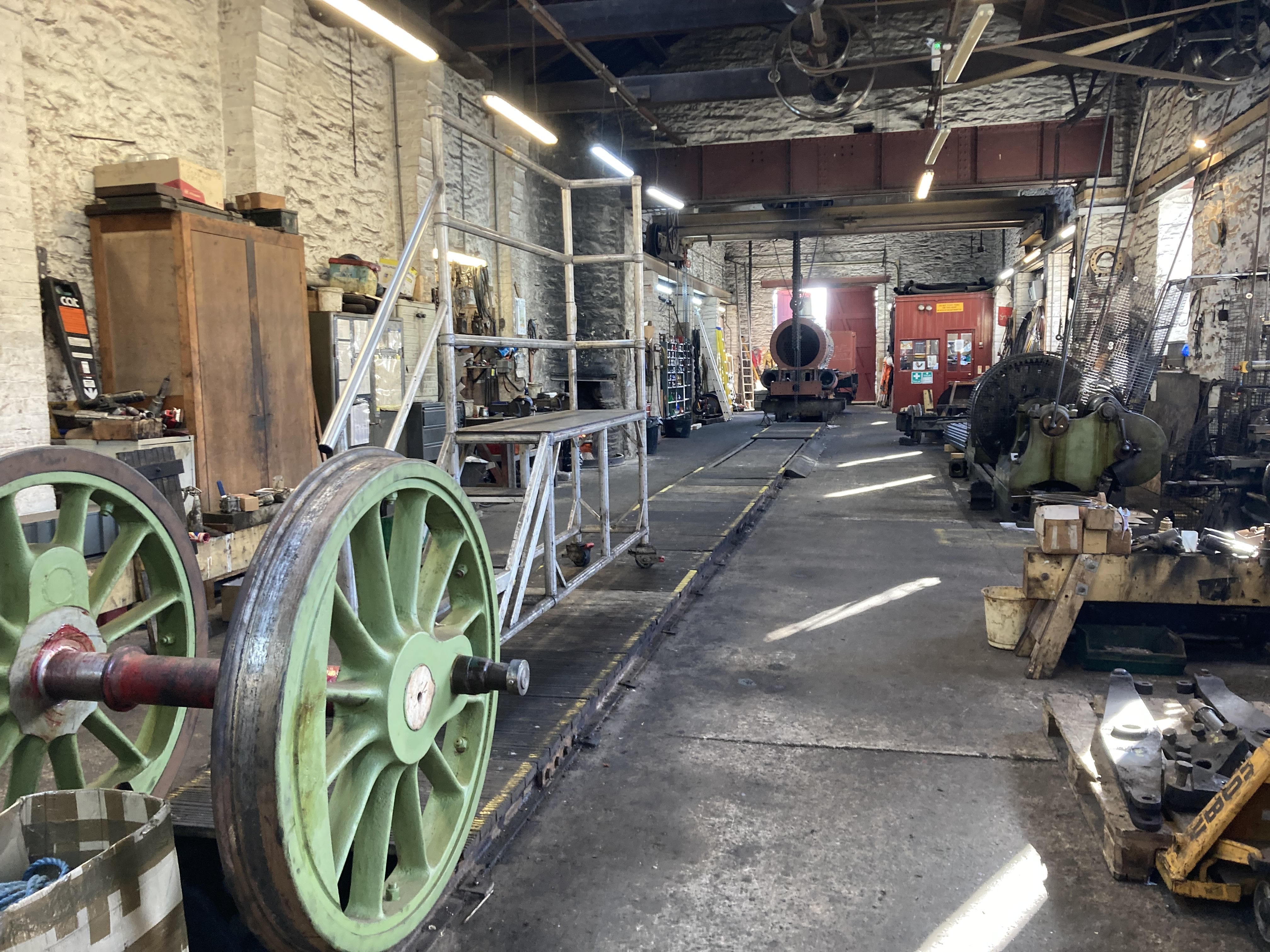
During a guided tour of the Isle of Man Steam Railway workshops, organised by Manx National Heritage on Sunday 11 October, attendees were given a tour and update from Steam Railway Supporters' Chairman, Bill Cubbon.
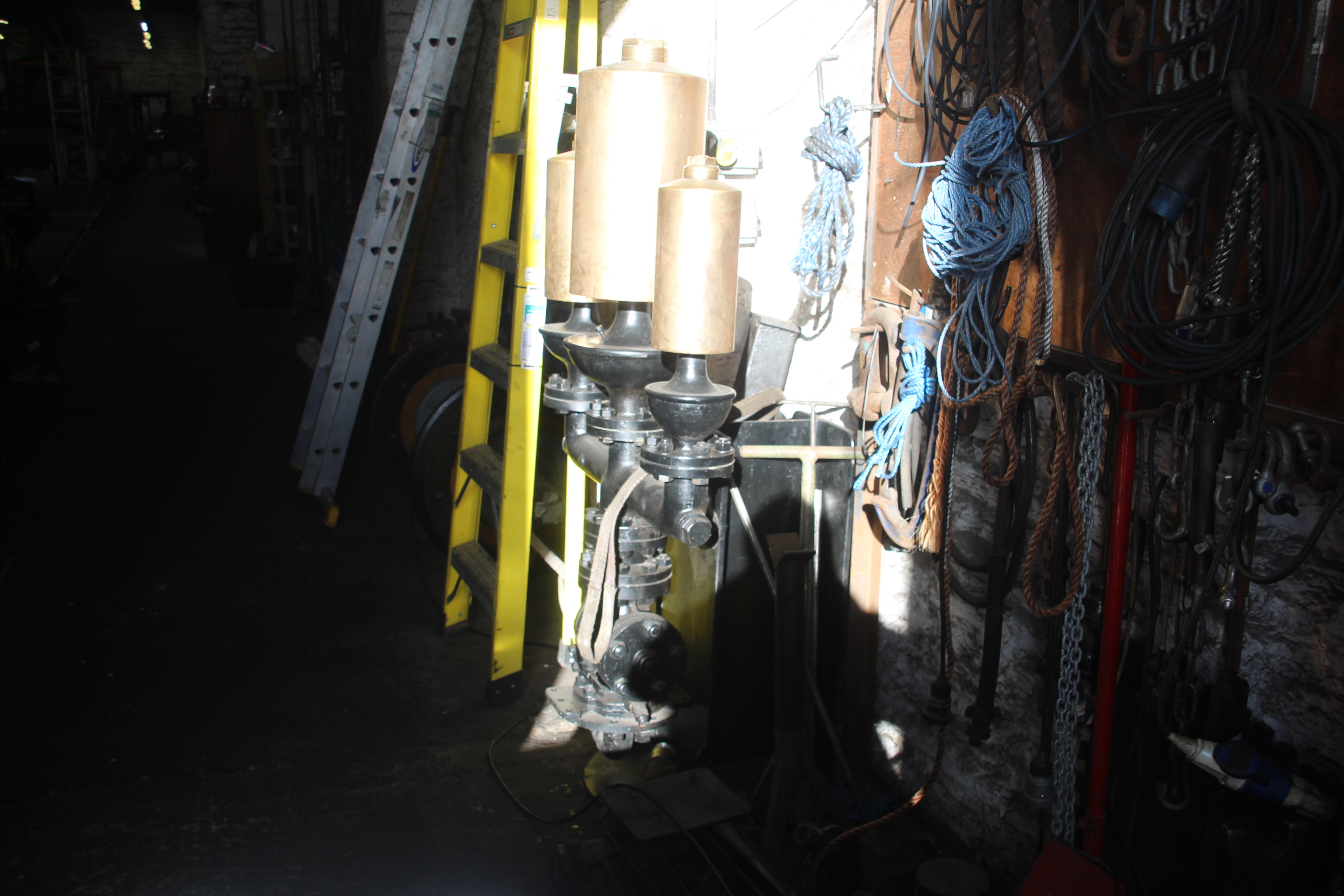
ABOVE: An unexpected sight upon entering Douglas steam railway workshops is this triple-bell ship’s whistle, originally from the 1947 TYNWALD (V).
Following the scrapping of the TYNWALD in the mid-1970s, the whistle was transferred to the 1965 SS BEN-MY-CHREE (V). After the withdrawal of ‘The Ben’ in the mid-1980s, the whistle was retained by the SPCo. It was brought it out of retirement on July 9th 2023 to be blown in celebration of the arrival of the MV MANXMAN in Douglas Harbour, as part of a ceremony welcoming the new flagship. On this occasion the whistle was hooked up to ex Isle of Man Highway Board Fowler road roller No.7 Reg MN 9391, which provided steam to sound the whistle.
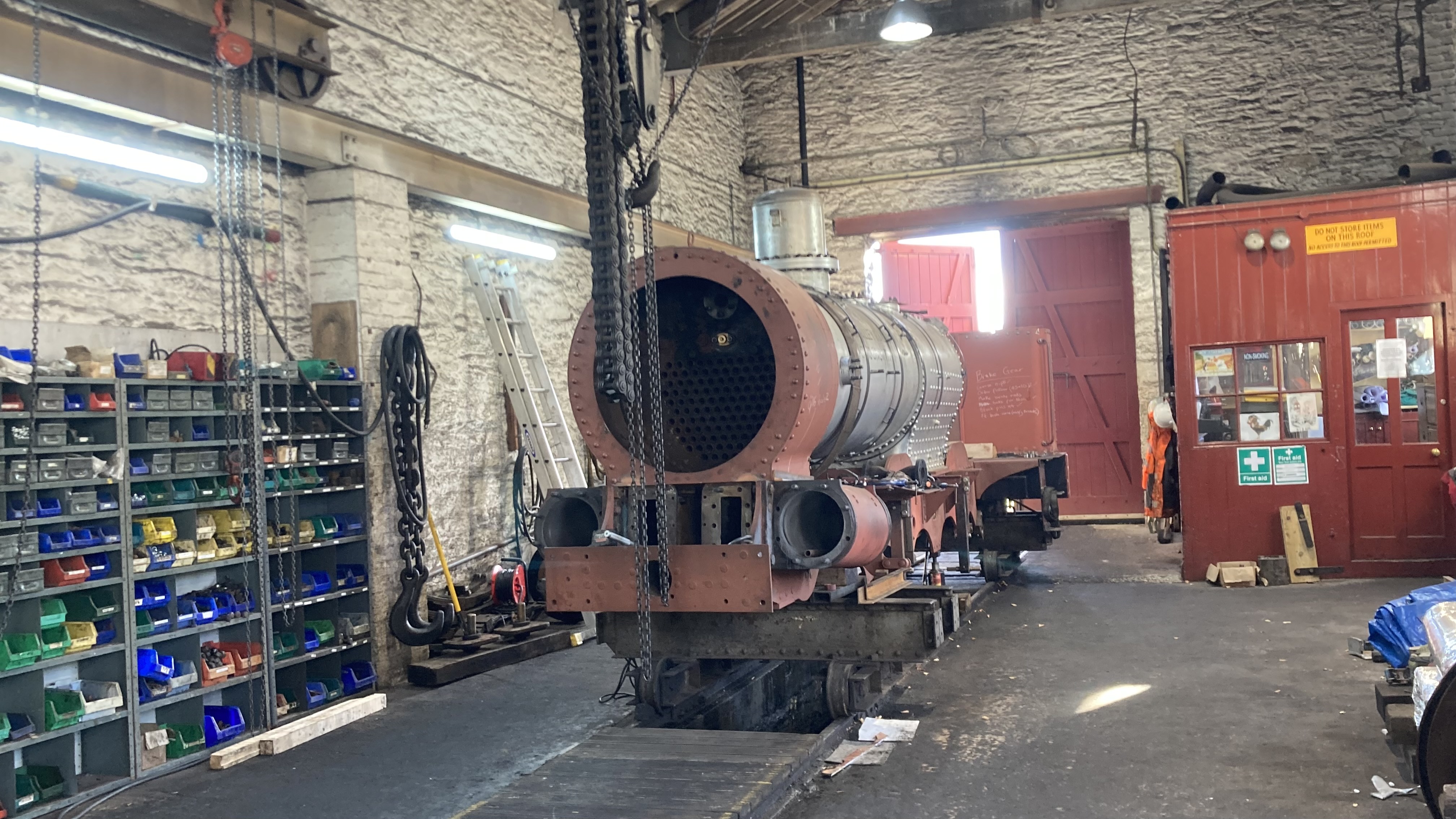
ABOVE: No. 12 Hutchinson inside the workshops, Sunday 11 October. Following the expiration of the boiler certificate in August 2019 the locomotive was withdrawn for an overhaul which started in May 2021. A new boiler had been built by the Severn Valley Railway in 2018, and following test fitting in Douglas in 2021, both the frames and boiler were sent back to the UK in August 2022 for modifications and overhaul work. The overhauled frames, modified boiler, and a newly constructed coal bunker arrived back at Douglas Station on October 26, 2023. It had been hoped that the locomotive would return to service for the 2024 season to take part in the 150th anniversary celebrations of the South Line. As it was, progress was held up, with other work taking precedence, including a similar ongoing overhaul of similar locomotive No. 10 G.H. Wood, which last operated in 2017. The work continues.
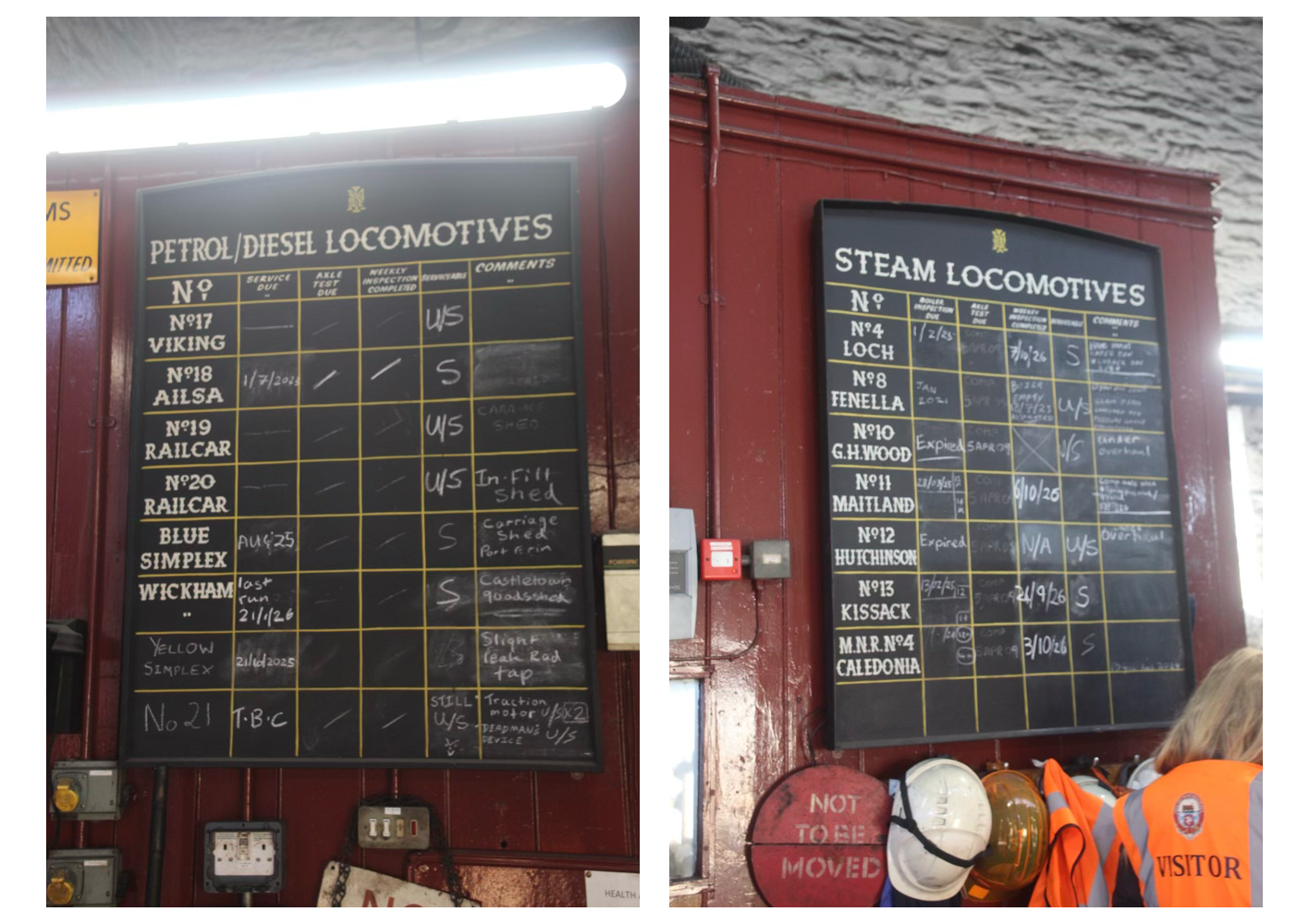
ABOVE: To the left of the main doors of the workshop are these boards, intended to show the status of various steam and diesel locos. Column headings for ICE locos include: ‘Service Due’, ‘Axle Test Due’, ‘Weekly Inspection Completed’, ‘Serviceable’, whilst the steam locomotives list: ‘Boiler Inspection Due’, ‘Axle Test Due’, ‘Weekly Inspection Completed’, ‘Serviceable’ and ‘Comments’.
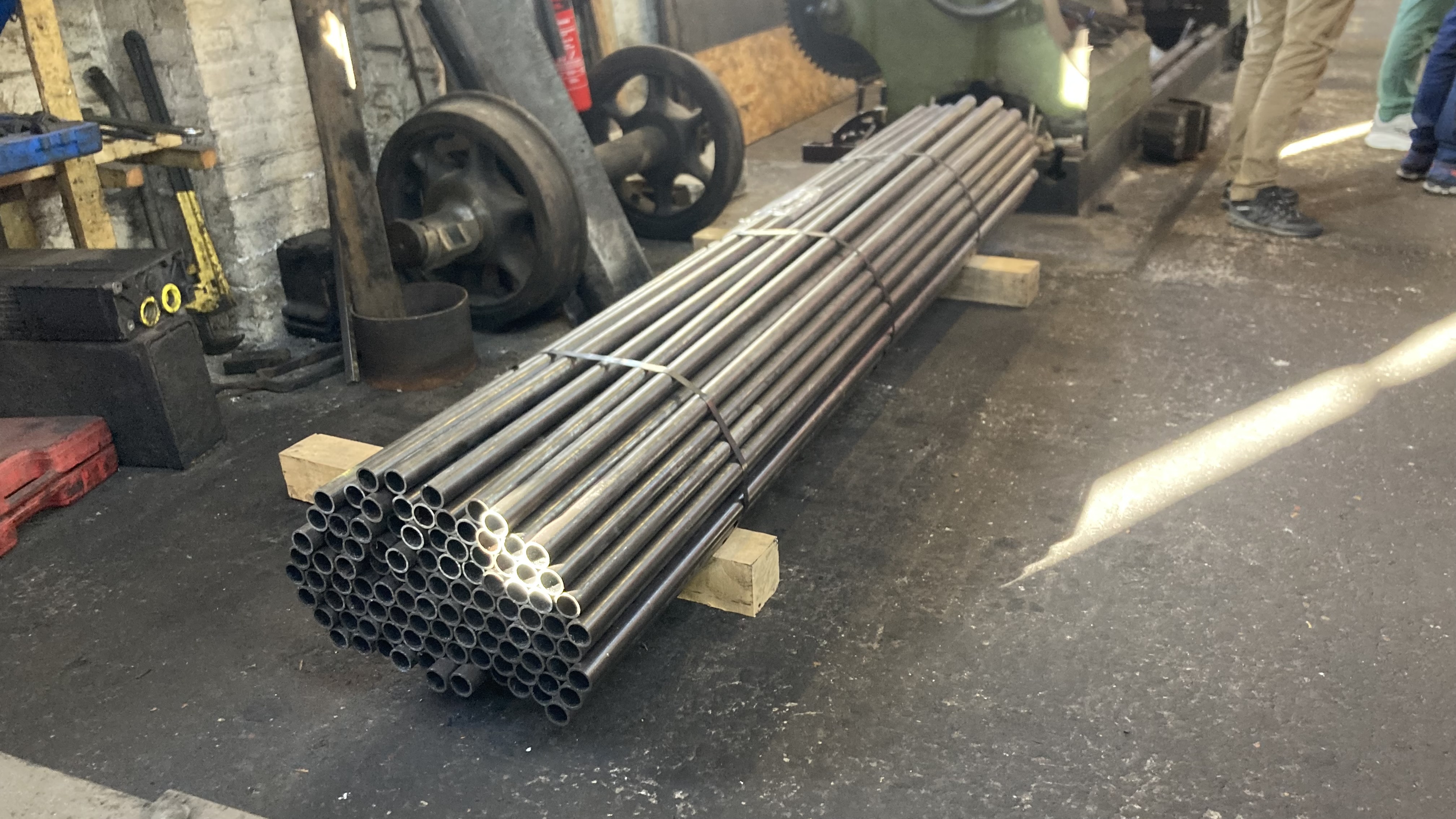
ABOVE: A recent delivery of 100 locomotive boiler tubes. The ‘medium’ boilers locos Nos. 10 - 13, have 121 - 1.625-inch diameter tubes.
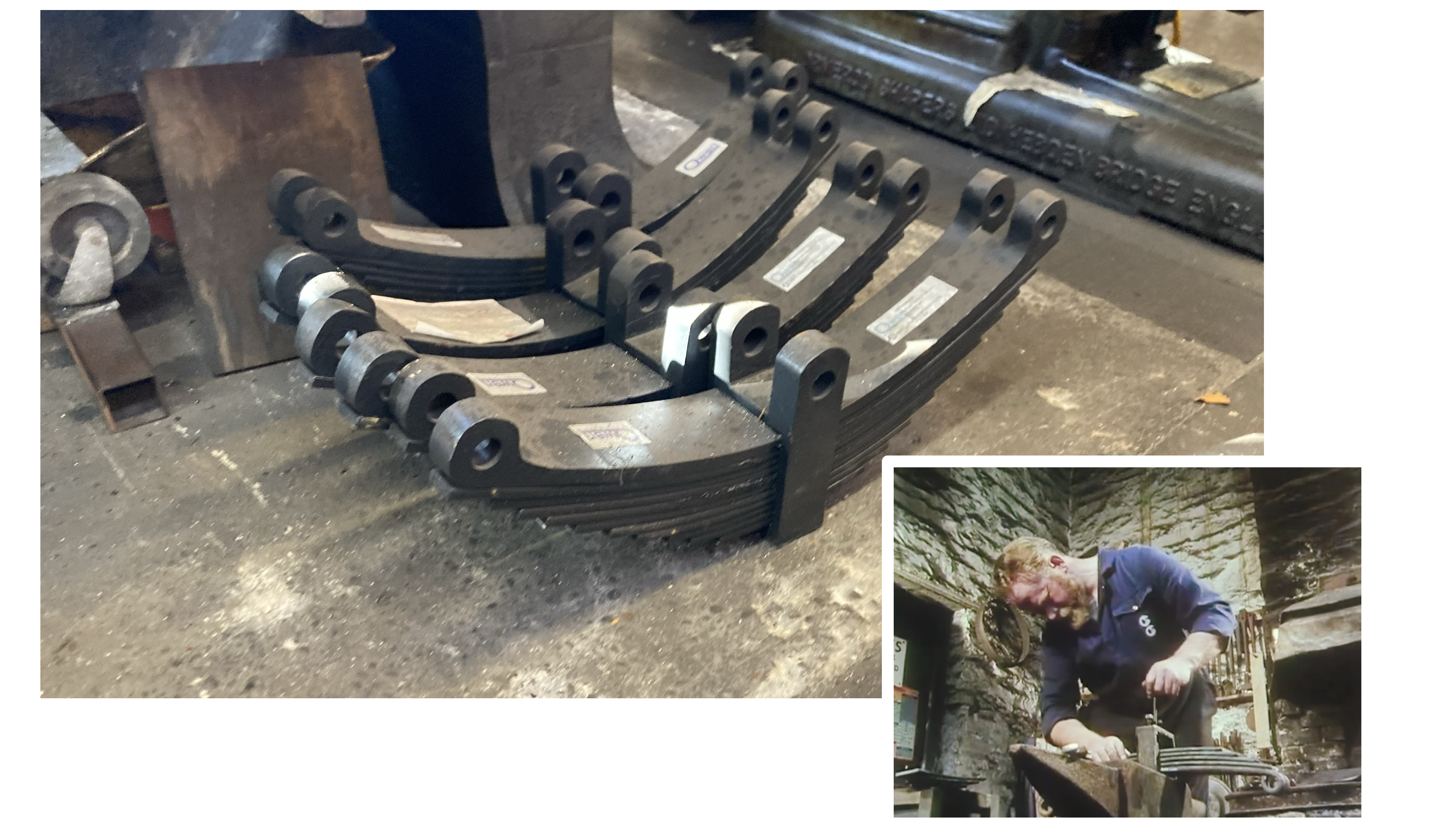
ABOVE: Four locomotive pony truck springs likely destined for the two locomotives under rebuild - Nos 10 and 12. These bought-in items are a contrast to the days when the workshops manufactured their own items such as these.
INSET: The 1988 BBC Bristol production ‘The Train Now Departing’ shows the late Brian Crossfield at work doing just that.
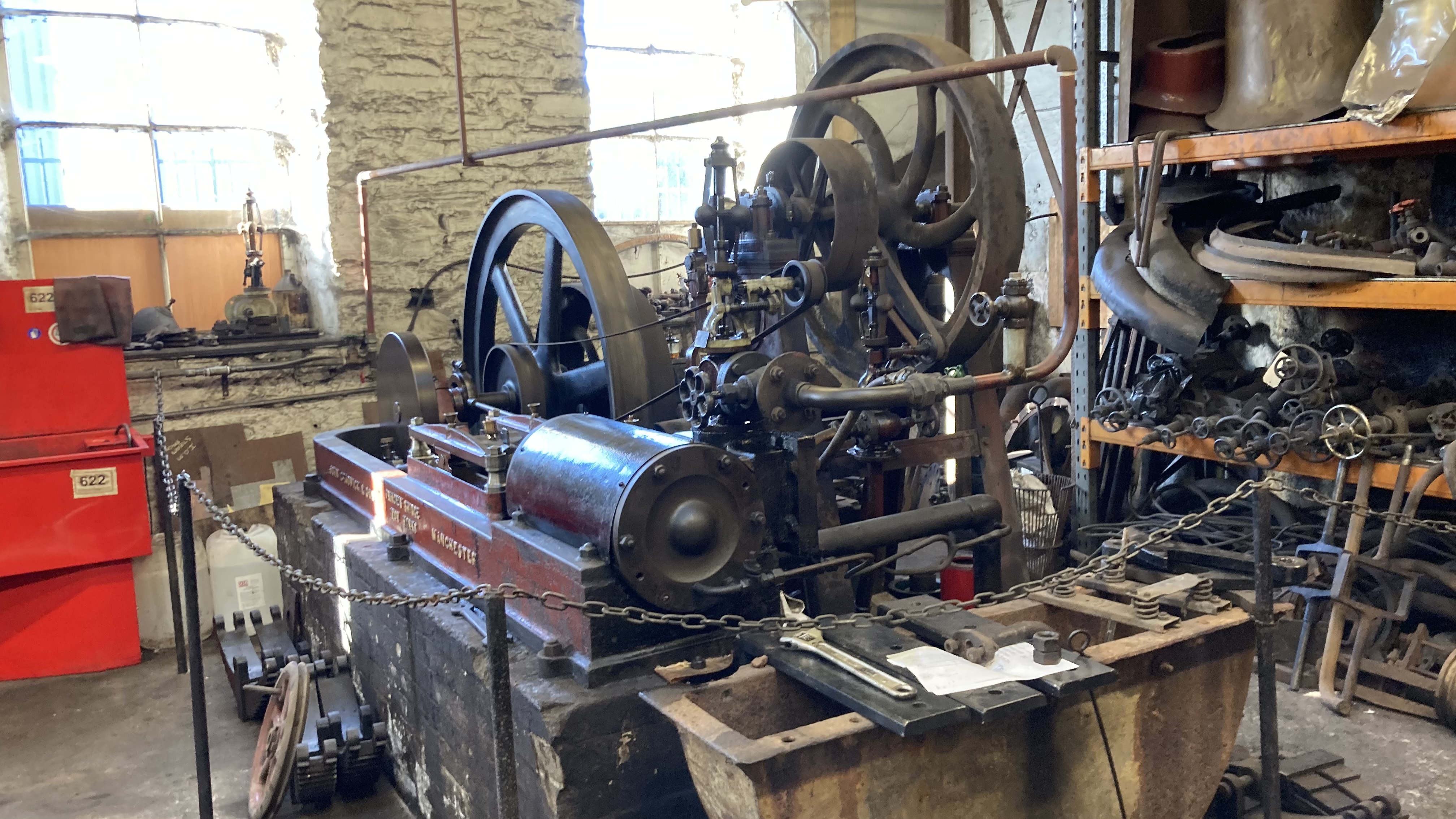
ABOVE: The single-cylinder horizontal steam engine that once powered all heavy machinery and tools in the fitting shop. It was built by John Chadwick & Sons Ltd of Manchester, and was originally supplied to an Accrington Cotton Mill. The IMR installed it here in 1920 to replace a smaller stationary engine. It is the only known surviving horizontal steam engine from this manufacturer. It operated until 1955, when an electric motor was installed to run the fitting shop machinery, as it continues to do to this day.
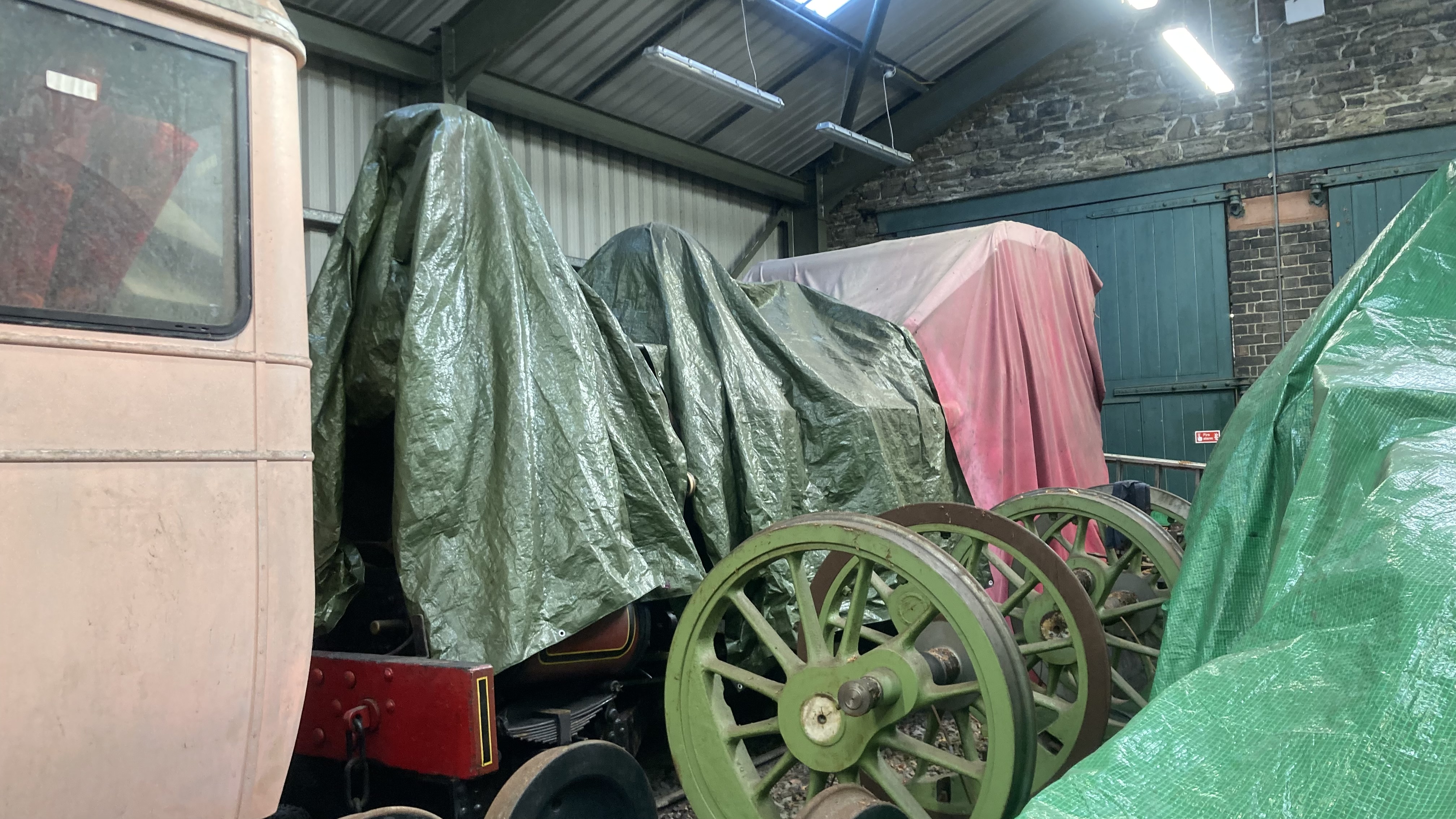
ABOVE: No. 8 'Fenella' (1894). Withdrawn after the 2020 season, shortly after which its boiler certificate expired, this smaller 2-4-0T t awaits its turn in the restoration queue behind the bigger locomotives such as G.H. Wood and Hutchinson – and perhaps one day, No. 16 Mannin.
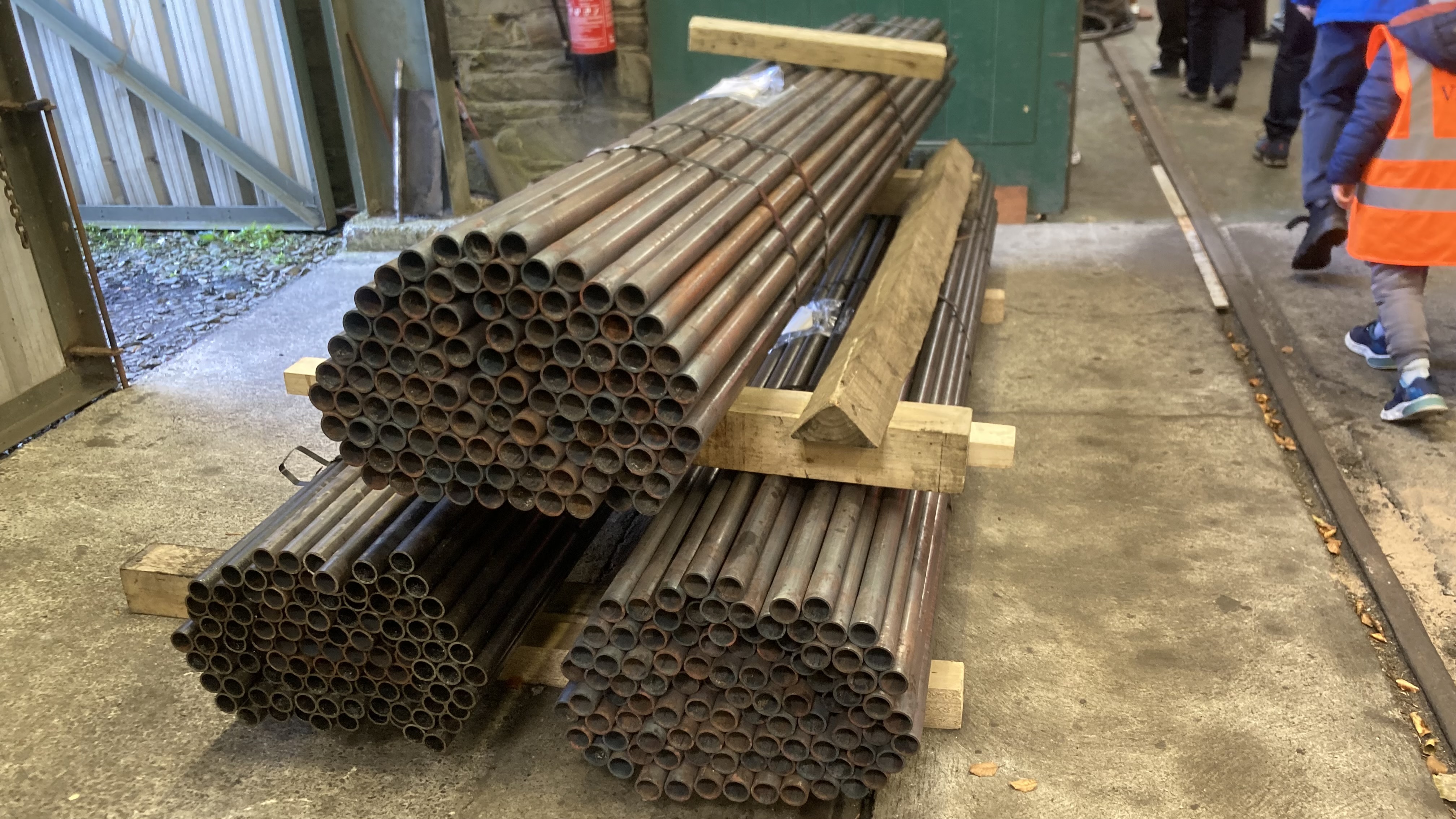
ABOVE: Stored nearby, no fewer than 300 boiler tubes.
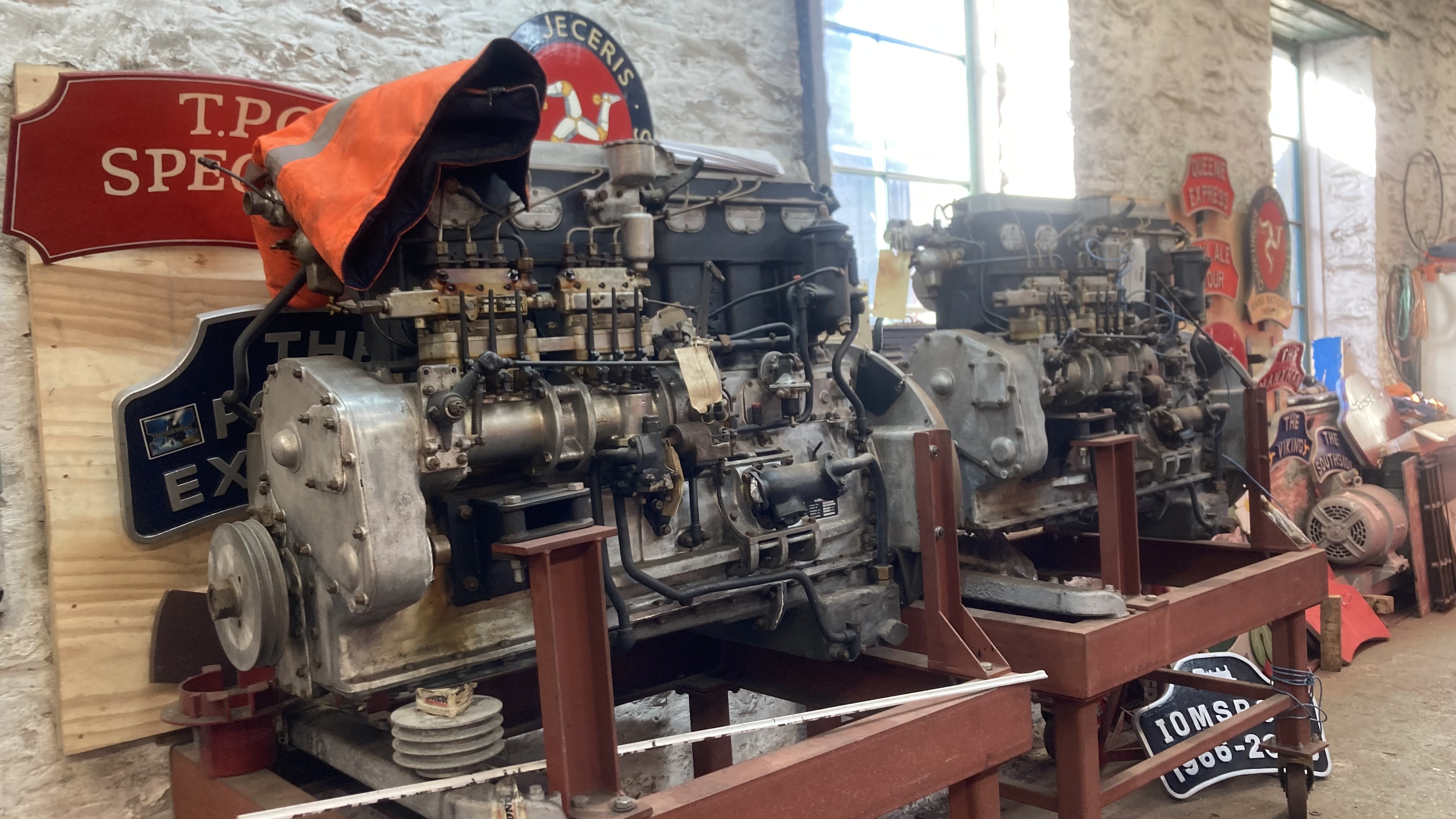
ABOVE Gardner 6LW diesels from the Co. Donegal railcars remain sat on cradles in the steam railway workshops. As part of a 1999 scheme to rebuild the railcars, these engines were sent to the old Barton Hall plant in Manchester, Paul Gardner Engineering Ltd. in Patricroft, and were reconditioned to original specification...
Almost thirty years later, these engines, along with new clutches, the original Meadows four-speed gearboxes and transmission, are in storage along with components such as radiators, oil cooler, filters, electrics, exhaust, bonnets etc) remain in store. The Island’s Steam Railway Supporters’ Association have during this time campaigned to see these vehicles returned to what would be popular and useful service.
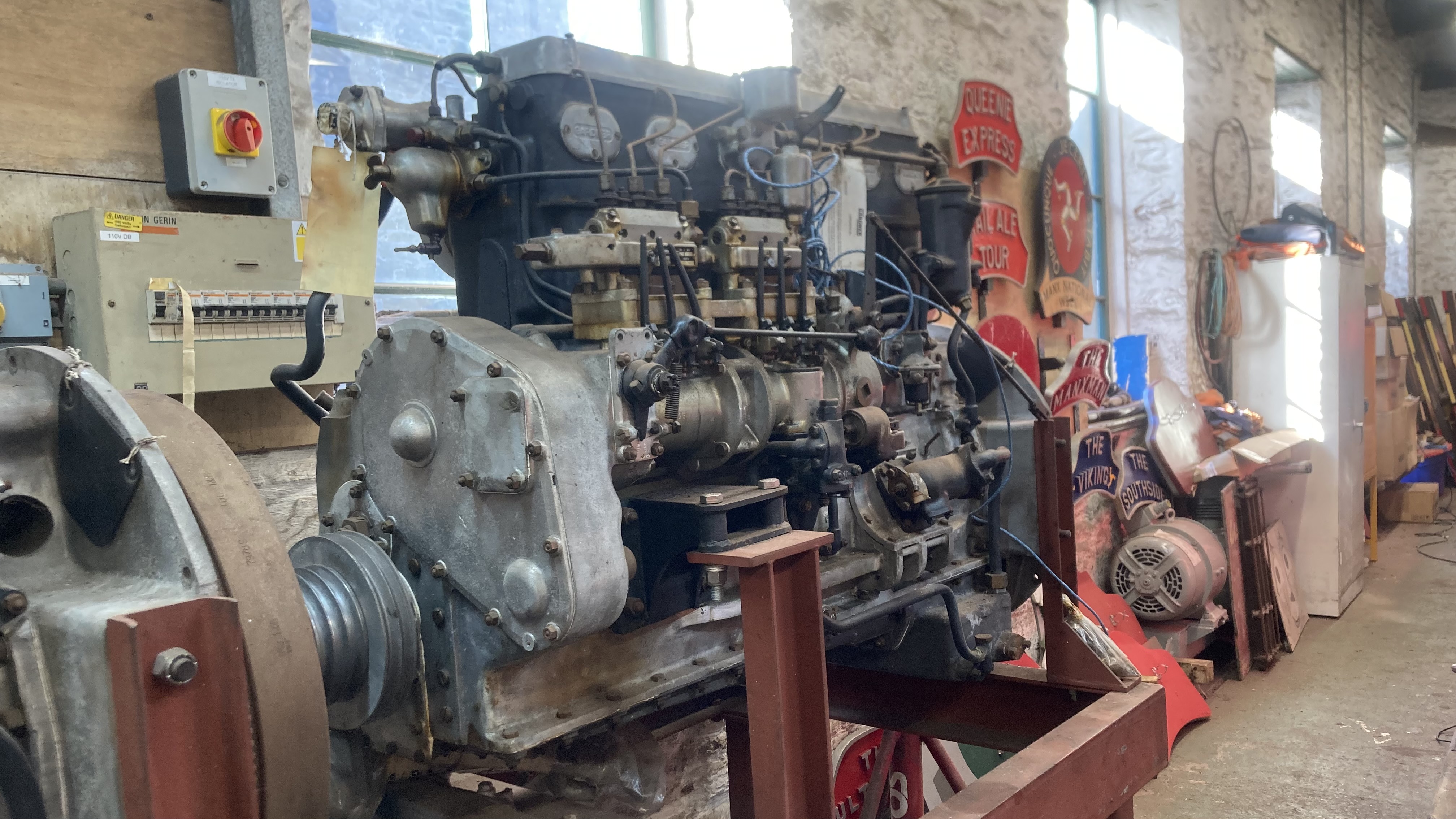
ABOVE: These legendary, naturally aspirated, inline-six-cylinder diesel engines were built by the British firm L. Gardner & Sons as part of a range launched in the 1930s. The four-, five-, six-, and eight-cylinder units gained a reputation for exceptional longevity, reliability, and fuel efficiency in both road and marine use. Known as ‘the busman’s favourite’, Gardner engines stayed the preferred choice for bus engineering managers until production ended in the mid-1990s, when emissions rules for road-going diesels would have demanded greatly altered or entirely new designs and a general shift toward high-speed turbo diesels from other makers. Even so, many Gardner engines continue to operate worldwide. Maybe these will, one day, join them...
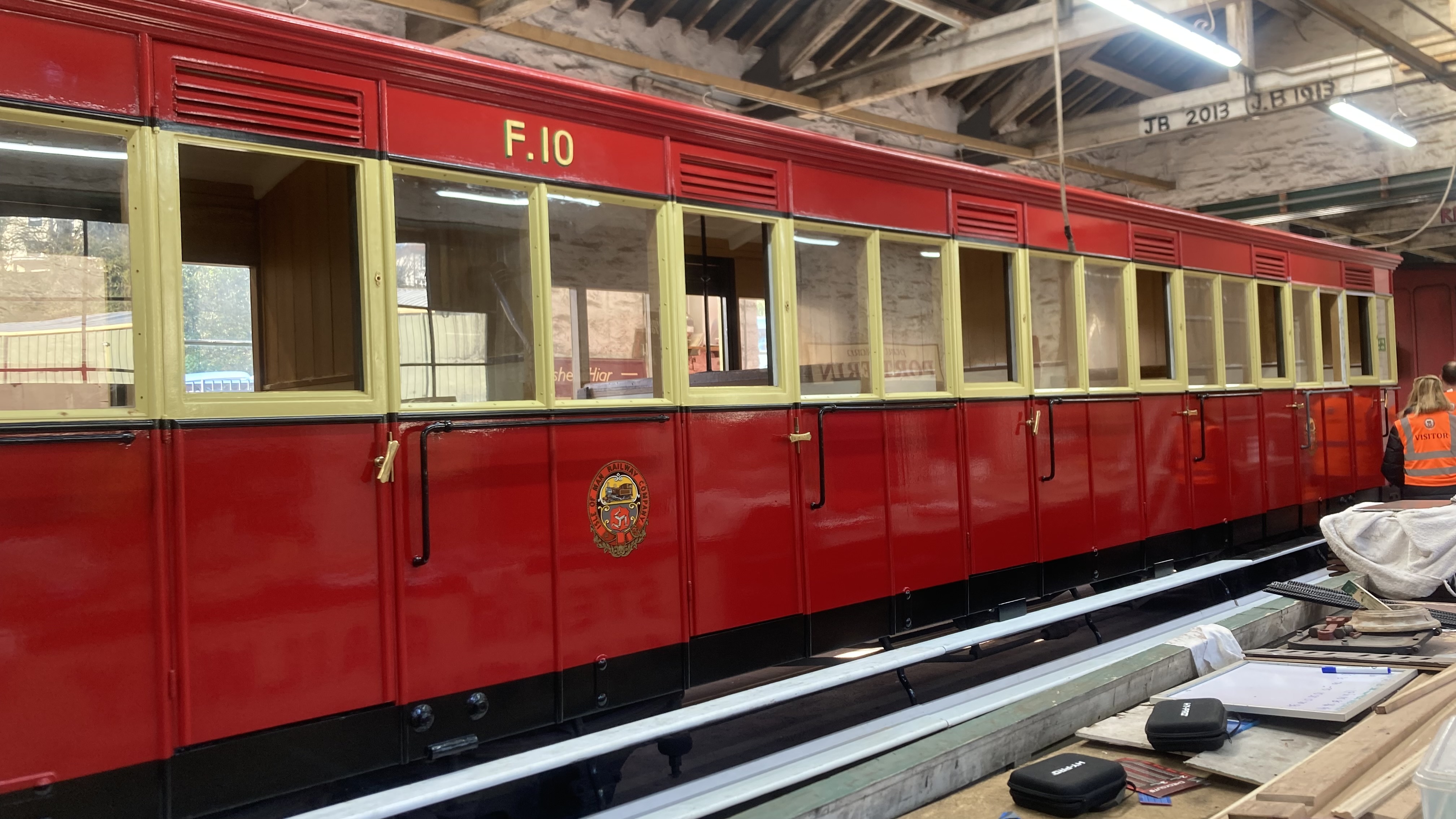
ABOVE: Looking superb, F10 was part of a batch of four vehicles supplied by Brown, Marshalls & Co., Ltd., of Birmingham in 1881 (F.9-F.12). Today this carriage is part of the backbone of the service fleet and has rarely been out of traffic for the last 145 years (!) It was withdrawn in 2019 and stored for a period, returning to use owing to traffic demands in early 2021 despite its poor condition.
After this F.10 was withdrawn and sent for rebuild by contractors in Ballasalla, where it remained until completion and return, coming back to the works in 2025. It entered the paint shop where now, as this picture shows, it now looks superb. Note the black-painted stripe along the lower part of the panelling, replicating the effect of an exposed steel frame – something this all-wooden carriage does not possess.
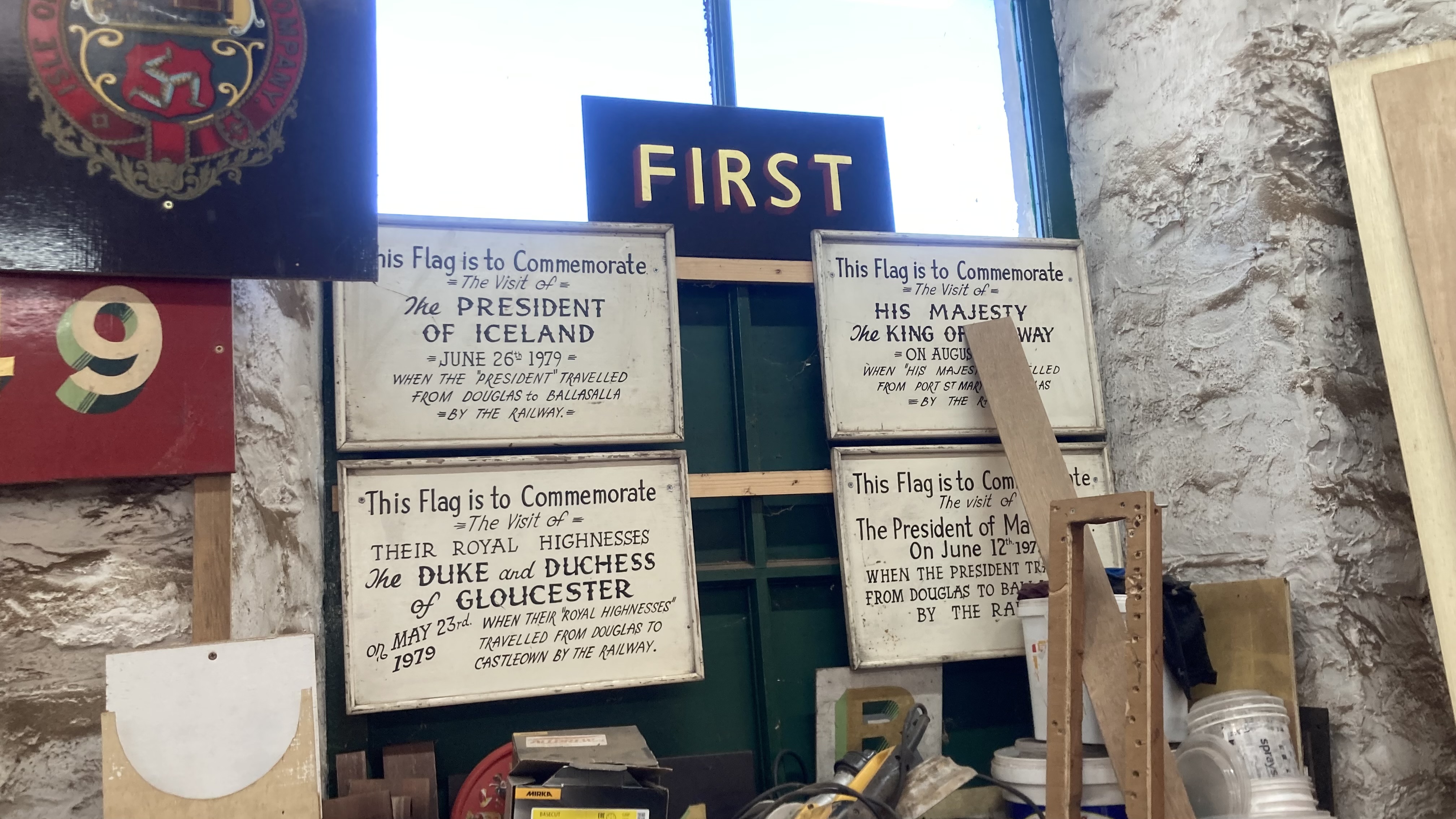
ABOVE: Signs of the times saved and displayed inside the workshops.
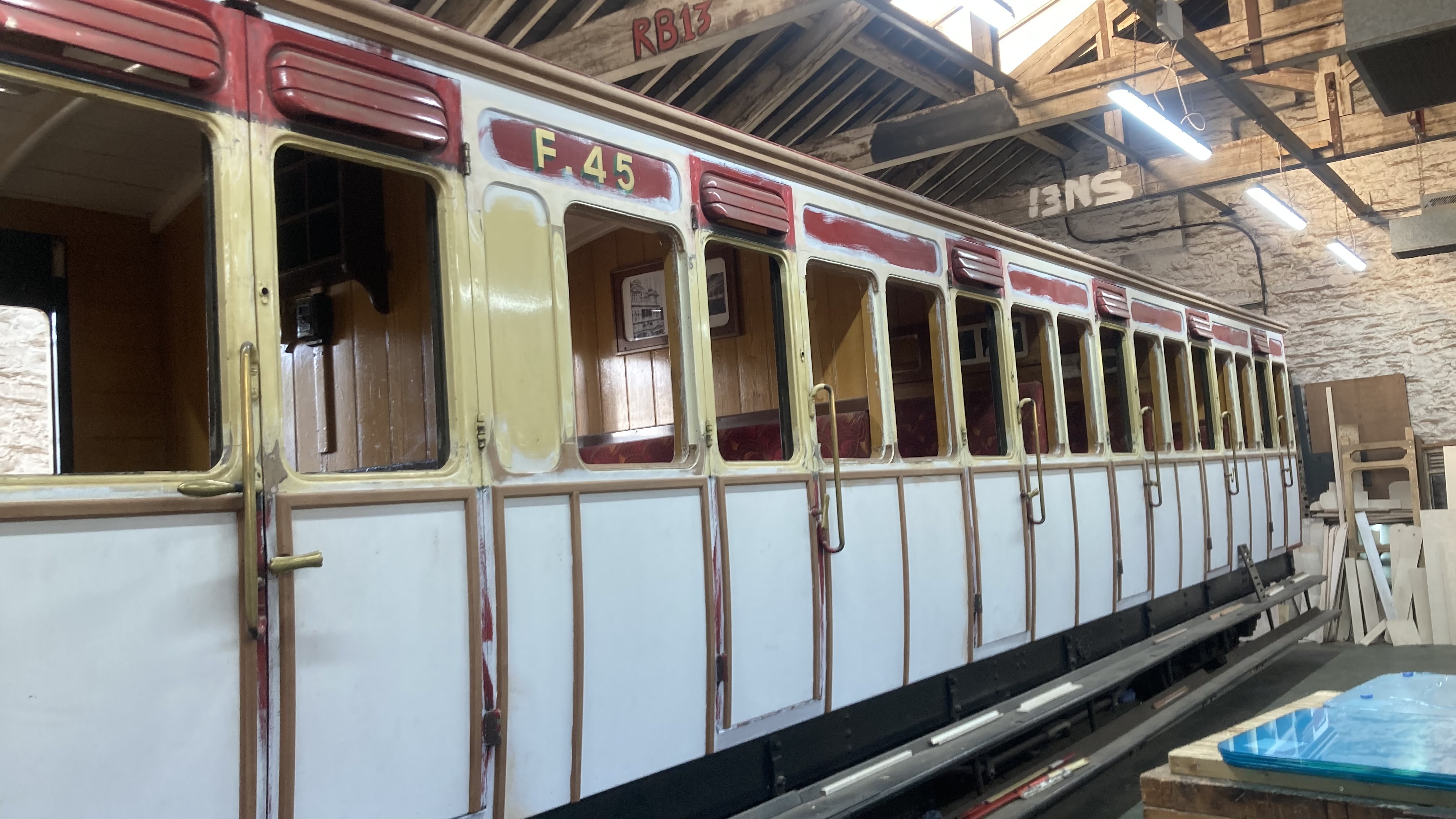
ABOVE: Having been used almost continuously and forming the mainstay of the carriage fleet since delivery, the ‘Big Fs’ are at last being given some timely attention after well over a century of service. F45 is one of two brake composite carriages delivered from the Metropolitan Carriage & Wagon Co., Ltd., of Saltley Works in Birmingham in 1913, the other being F.46.
Since 1985 this carriage has been turned so that the guards’ compartment is situated at the northern end. In 2015 the first class compartments were fitted with seat dividers and armrests which reduced the overall capacity to 46 from 48, there being accommodation for three passengers per bench in these compartments rather than the more usual four.
It was withdrawn from traffic in October of 2025, seen here undergoing a major overhaul and it is reported that this will include being lifted from its underframe and a new frame being placed beneath it as well as replacement floors.
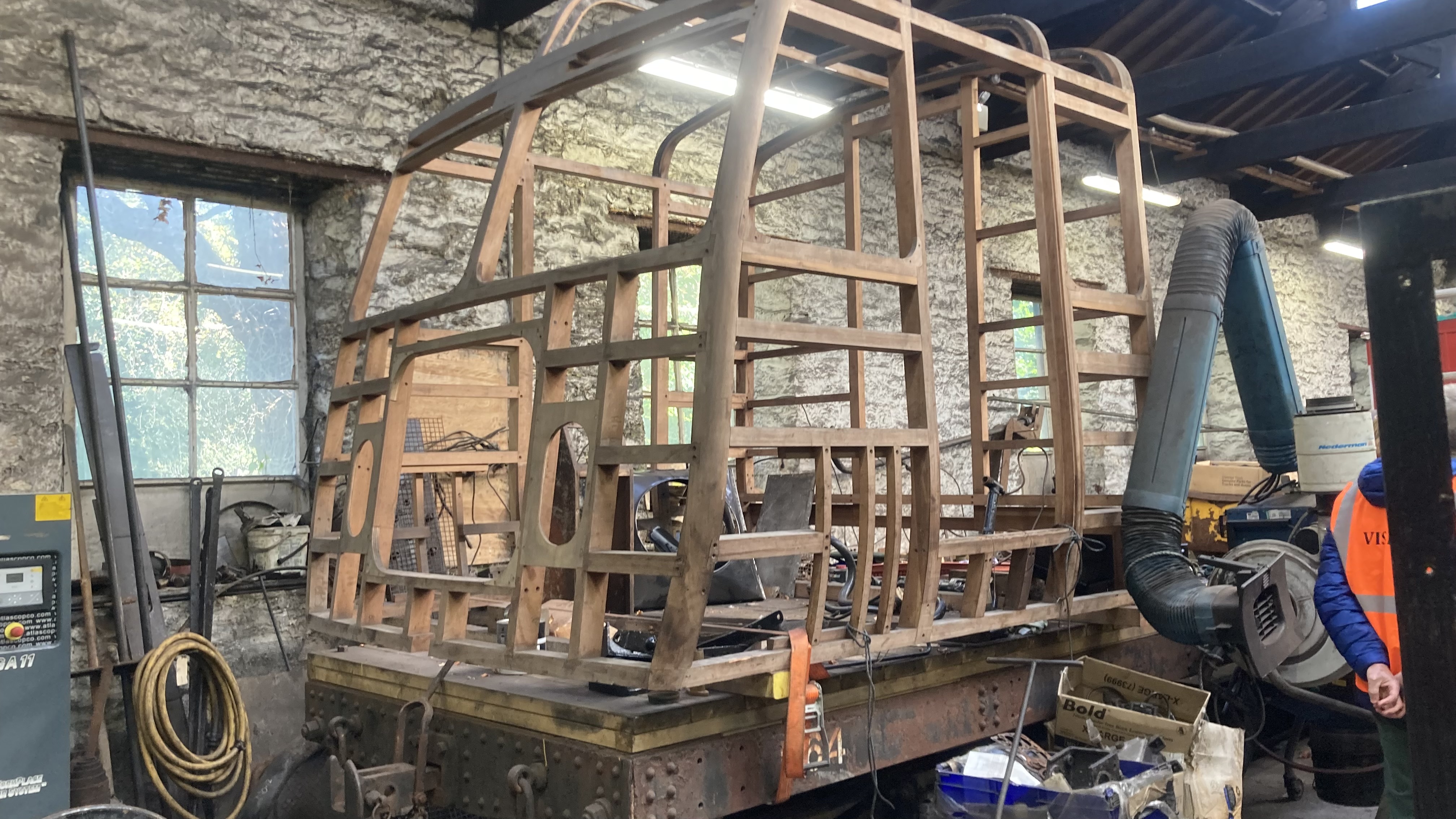
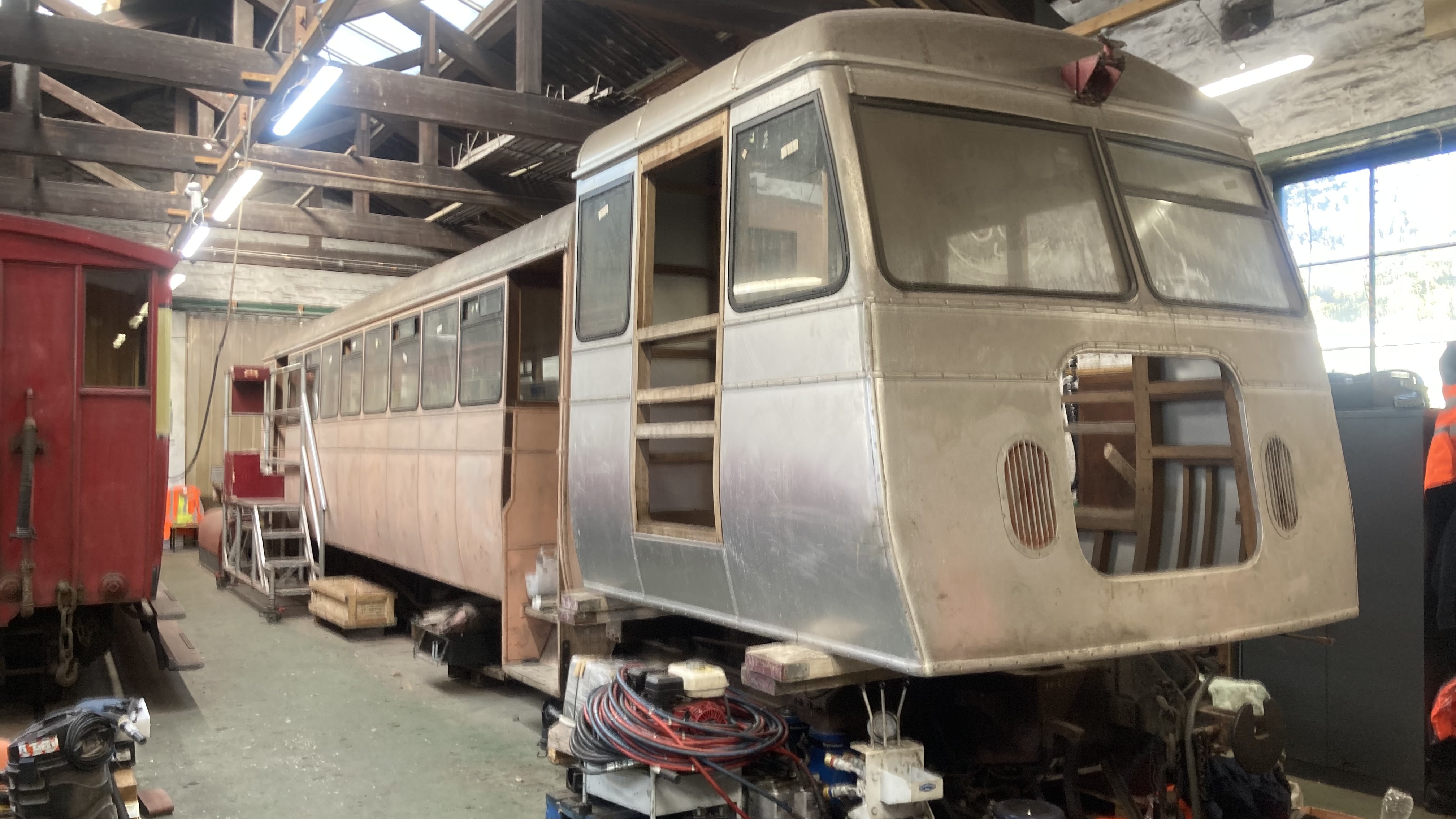
ABOVE: Ex-County Donegal railcars No. 19 (ABOVE) and No. 20 (BELOW) inside the workshops, Sunday 11 October. The comprehensive rebuild of these units, which began way back in 1999 was summarily aborted following the arrival of David Howard, who spotted that the projects had gone rather over budget. Considerable progress, including a rebuild of the Gardner 6LW engines, had already been carried out when the project was cancelled. A remarkable rebuild of the cab framework incorporating substantial use of mahogany is evident in these views.
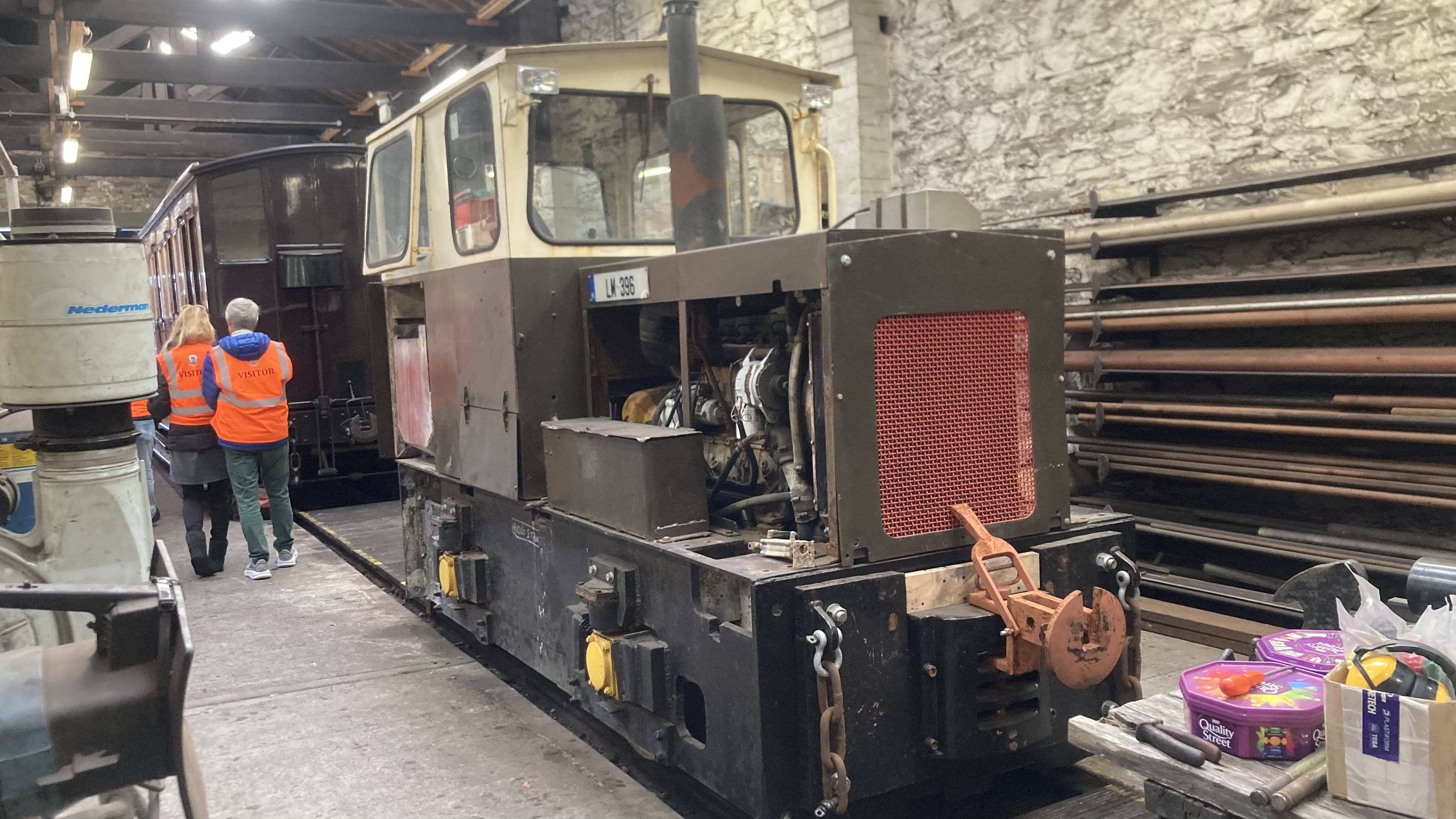
ABOVE: In 2024, two small diesel-hydraulic locomotives, LM 389 and LM 396 were obtained second-hand from Bord na Móna in Ireland. The sale followed the cessation of peat harvesting and the closure of its 3ft gauge line. LM 396 shown here, was designed and built in-house by BnM in 1995. Both units were refurbished before export from Ireland to the Isle of Man. They are meant for shunting and track maintenance.
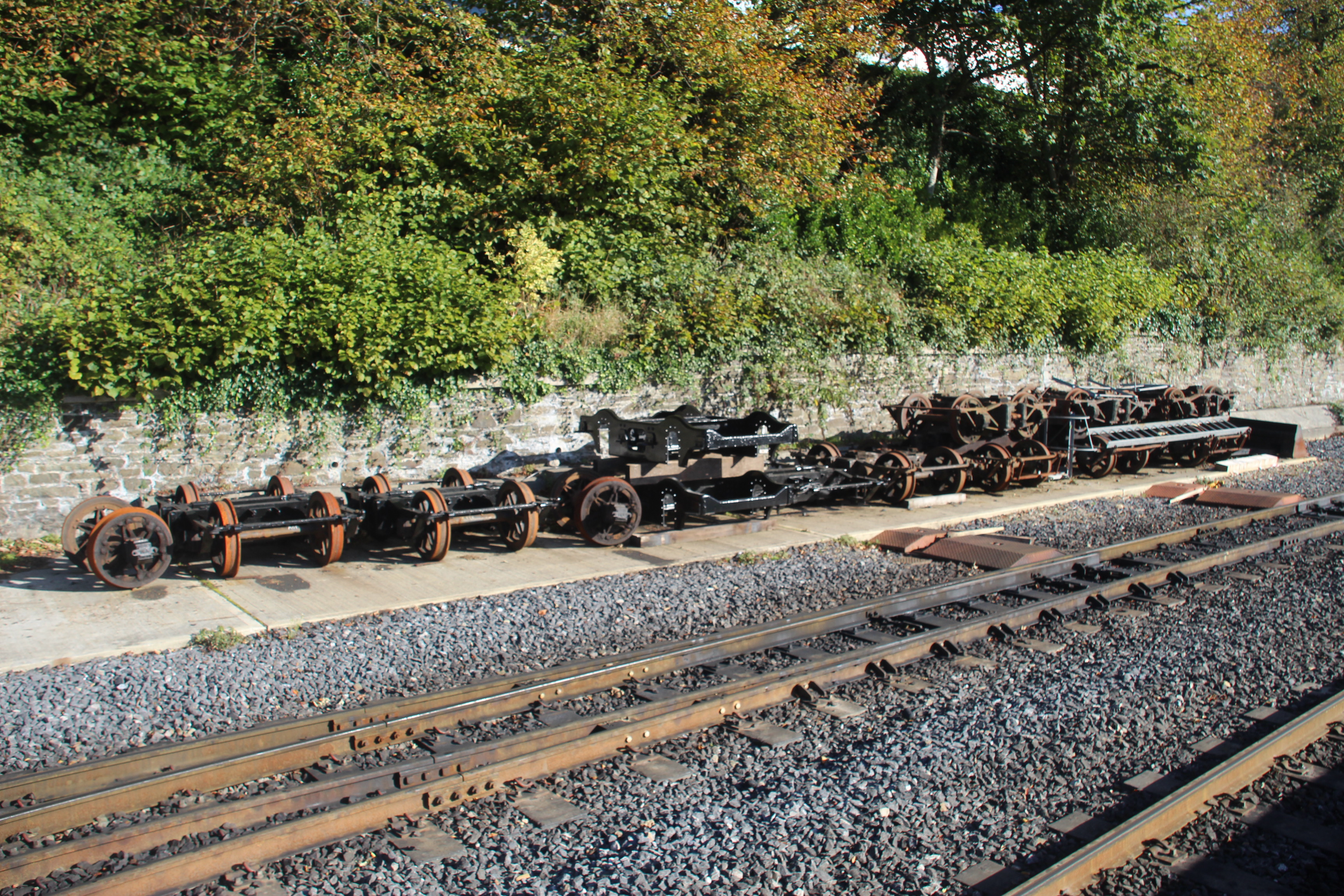
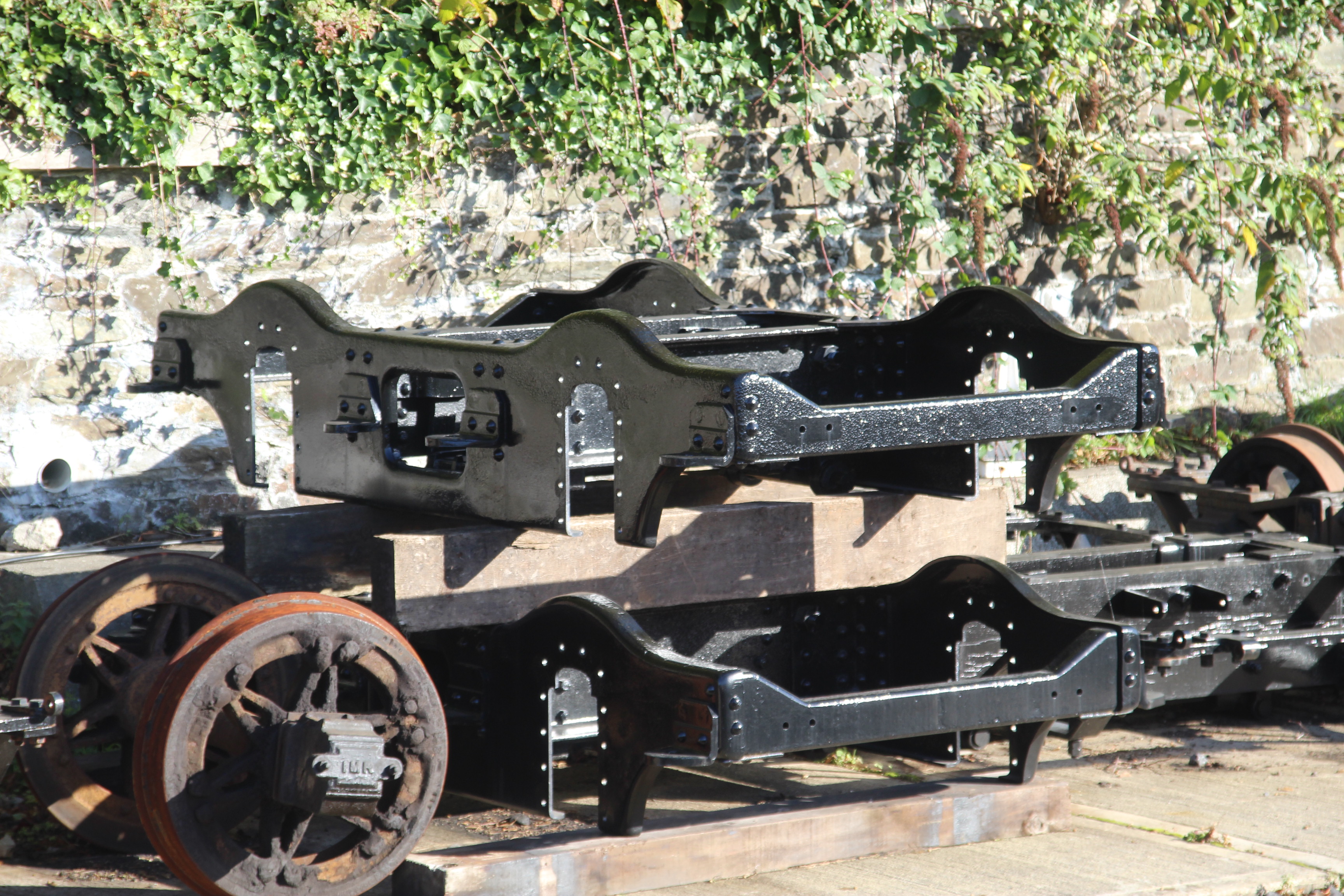
ABOVE: For decades, a forlorn row of perhaps two dozen redundant wheel sets, could be seen lined up outside the railway workshops awaiting some future purpose. Long gone, today they have been replaced by a rather more hopeful sight of a collection of diamond frame trucks, and a pair of renovated plate-frame truck frames (BELOW), the latter awaiting a return to service.